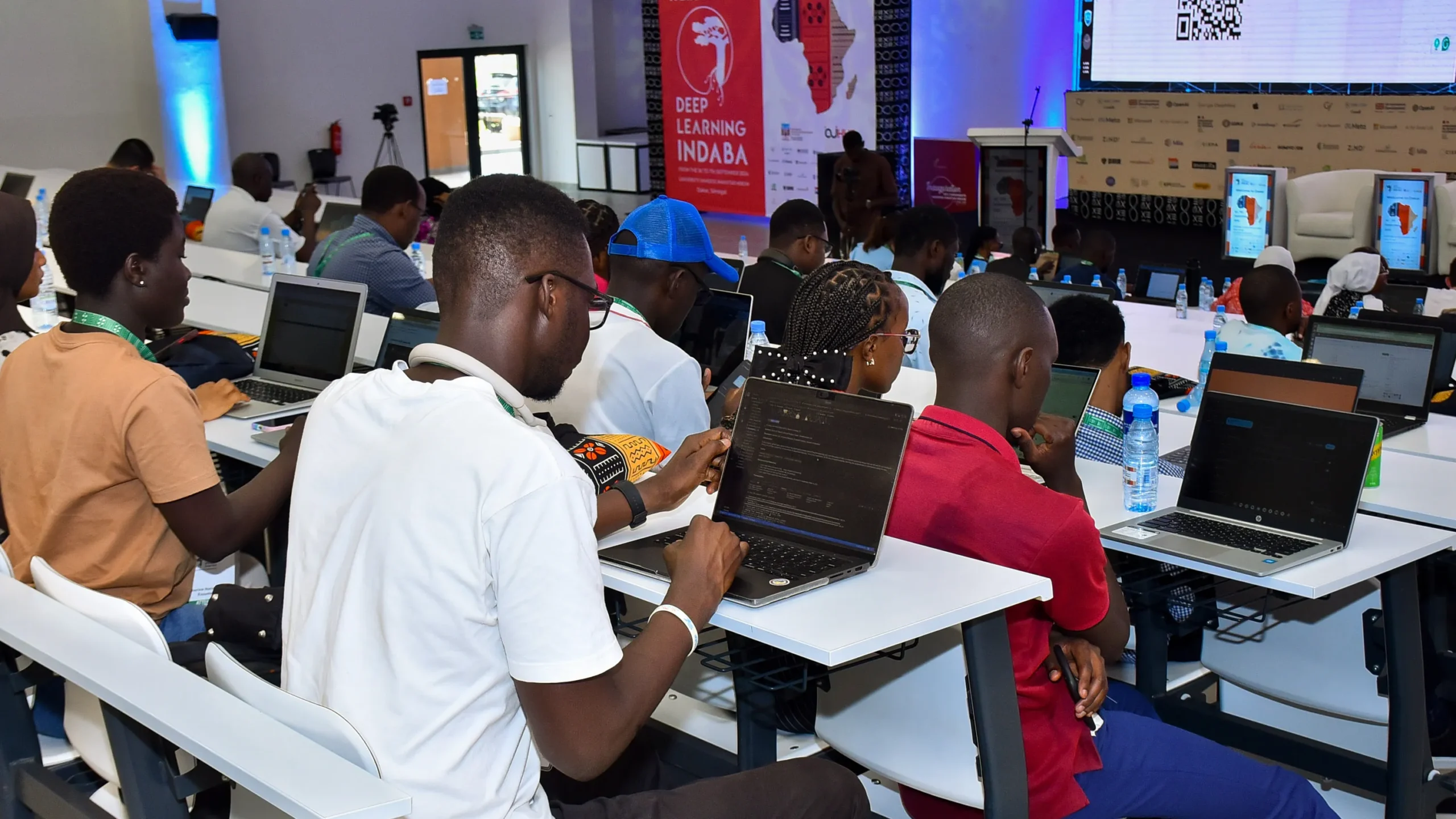
Picture a logistics supervisor in Lagos, monitoring AI-optimised delivery routes on a smartphone. Productivity is up. New supervisory roles emerge.
Now contrast that with a data annotator in Nairobi, labelling images for global AI models at $1–$2 per hour, working short contracts, exposed to disturbing content, with little protection.
These two realities sit side by side in Africa’s AI moment.
Artificial intelligence is already reshaping African economies. The same innovation unlocking efficiency and growth can also entrench exploitation if left unguided. This tension defines the debate around AI innovation in Africa: job risks vs growth. This canonical guide consolidates CreativeTechAfrica.blog’s work on AI, labour, and ethics into one authoritative reference. Grounded in African contexts, from Kenya’s data hubs to Rwanda’s digital governance push, it equips policymakers, founders, educators, and youth to navigate AI’s labour impact with clarity and realism.
(For the full ecosystem context → our pillar page: AI in Africa Guide)
The Current State of AI Innovation and Jobs in Africa (2025)
AI adoption across Africa is accelerating, but unevenly.
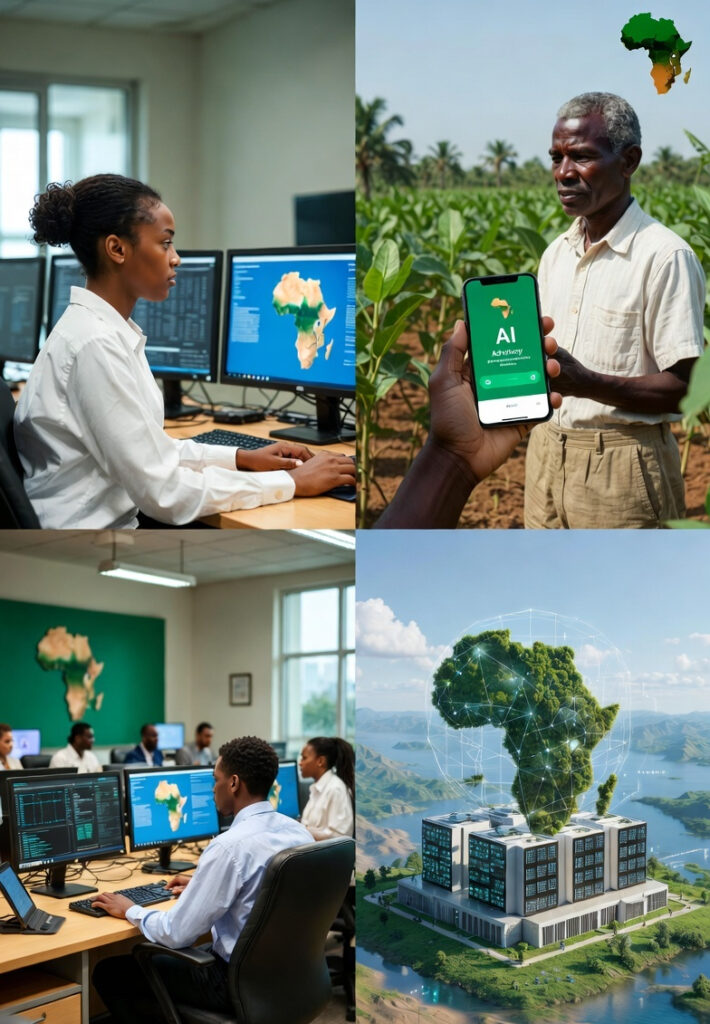
In 2025, AI use concentrates on:
- Agriculture (yield prediction, pest detection)
- Health (diagnostic support, triage tools)
- Finance (fraud detection, credit scoring)
- Logistics & public services (routing, monitoring)
African startups raised ~$3 billion in 2025, surpassing 2024 totals, with Nigeria, Kenya, South Africa, Egypt, and Rwanda leading activity. Yet infrastructure gaps, unreliable power, and limited broadband continue to restrict rural inclusion.
The African Development Bank projects AI could add up to $1 trillion to Africa’s GDP by 2035, with agriculture alone capturing around 20% of gains. Meanwhile, McKinsey and the World Economic Forum estimate 230 million digital jobs could emerge in Sub-Saharan Africa by 2030.
Crucially, Africa’s labour market differs from the Global North:
- Informal and physical work dominate
- Many roles are augmented, not replaced, by AI
- Disruption risk is concentrated in formal, routine, entry-level roles
Ethical and Labour Market Implications
AI does not enter neutral terrain. It reshapes power.
Algorithms increasingly influence:
- Hiring and screening
- Work allocation
- Performance monitoring
Without safeguards, this creates risks of bias against women, youth, and marginalised communities.
A growing ethical fault line lies in data labour. Across Kenya, Uganda, and parts of West Africa, annotators and content moderators support global AI systems under precarious conditions, low pay, fragile contracts, and psychological harm from exposure to toxic material.
Environmental trade-offs compound labour risks. Data centres demand significant electricity and water, straining grids already under pressure and raising questions about green industrialisation.
Ethical AI in Africa must therefore centre:
- Decent work and fair wages
- Transparency in algorithmic decision-making
- Environmental sustainability alongside innovation
Where Job Risks Are Real
AI-related job risks in Africa are not evenly distributed.
Most exposed roles include:
- Routine clerical and back-office work
- Basic customer service and call centres
- Transcription and low-skill data annotation
BPO sectors in Kenya and South Africa are already seeing reductions as chatbots absorb first-line support tasks. For youth, this narrows traditional entry pathways into the formal economy.
Environmental risks also loom. Rapid data-centre expansion increases energy and water demand, particularly in drought-prone regions.
Without policy intervention, AI risks reproducing extractive patterns, value captured globally, and costs borne locally.
Where New Growth Is Emerging
Despite risks, AI-driven job creation is real, especially where AI augments rather than replaces human work.
Key growth areas:
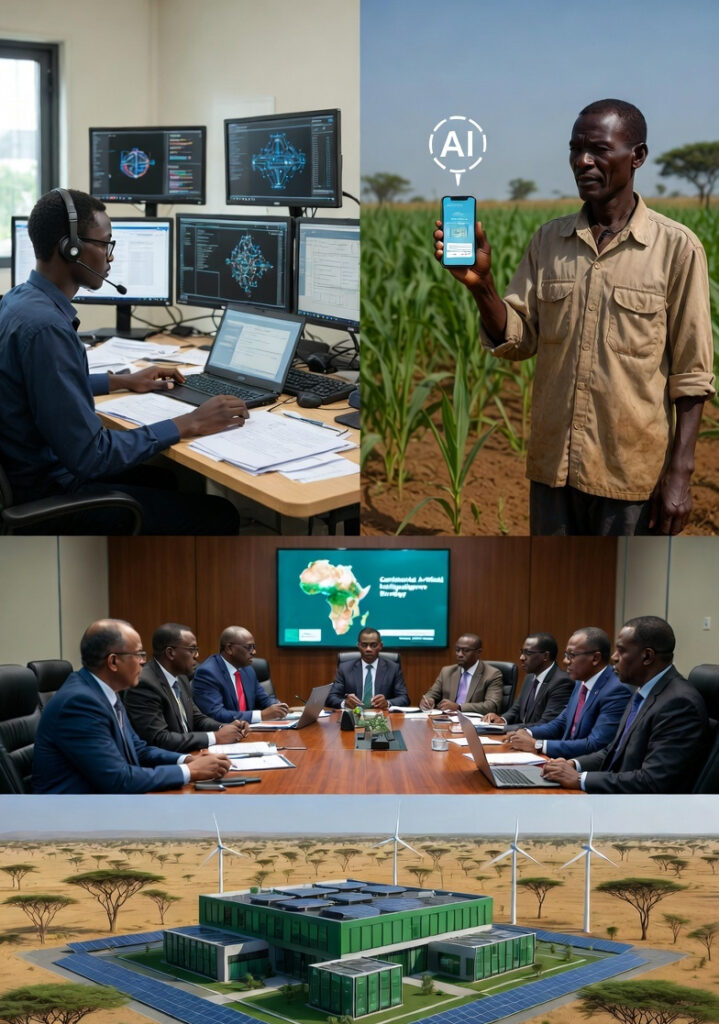
- Agriculture: AI advisory tools create demand for extension officers, local technicians, and data collectors across Kenya, Ghana, and Rwanda.
- Healthcare: Diagnostic pilots in South Africa generate roles for technicians, translators, and system supervisors.
- Logistics & commerce: Route optimisation platforms spawn analytics, maintenance, and operations jobs.
- Startups: Lagos, Kigali, Cairo, and Cape Town increasingly hire engineers, product managers, ethicists, and AI governance specialists.
Productivity gains, estimated by AfDB at ~20% in agriculture, enable business expansion, indirectly creating employment beyond tech roles.
Youth, Skills, and Inequality
Africa’s youth bulge remains its greatest asset and vulnerability.
Millions enter labour markets annually, while underemployment remains high. AI could widen inequality if skills concentrate in urban elites, excluding women and rural youth.
Yet successful models exist:
- Community-based AI literacy programs
- Vocational pathways blending digital skills with problem-solving
- Employer-linked training rather than certificate inflation
Inclusive AI strategies must:
- Recognise informal and hybrid skills
- Target gender and rural gaps explicitly
Tie skilling to actual labour demand, not hype
Policy, Regulation, and What Africa Must Do
The African Union’s Continental AI Strategy (Phase 1: 2025–2026) lays governance foundations, but national execution is decisive.
Priority actions:
- Update labour laws for platform and data work
- Enforce fair wages and social protection across AI supply chains
- Mandate algorithmic transparency and impact assessments
- Invest in renewable energy for sustainable AI infrastructure
- Harmonise regulations via the AfCFTA Digital Protocol
AI must be treated as economic infrastructure, not just innovation-governed collaboratively by governments, firms, unions, and civil society.
Future Outlook: 2026–2030
Two paths lie ahead:
Inclusive Path:
Moderate displacement offset by new roles, productivity gains in agriculture, health, and logistics, and broad participation in a projected $1 trillion GDP boost.
Fragile Path:
Enclave growth, deepening inequality, unchecked data exploitation, and energy strain. What matters most is governance capacity, not algorithmic sophistication.
FAQs
Will AI cause mass unemployment in Africa?
Unlikely. Most informal and physical jobs are low-risk; outcomes depend on policy and skills.
Which jobs are most at risk?
Routine clerical roles, basic customer service, and low-skill data annotation.
Is data-labour exploitation inevitable?
No. Regulation, unionisation, and cross-border enforcement can change outcomes.
What should governments prioritise first?
Labour law updates, reskilling funds, renewable energy, and transparency rules.
Conclusion
AI innovation in Africa balances promise and precarity. With ethical governance, fair labor standards, and inclusive training, the continent can turn challenges into shared success. This success is based on African realities and the potential of its youth.
This article serves as CreativeTechAfrica.blog’s canonical reference on AI and work.
👉 Download the 2025 African AI Prompt Library
💬 What is your biggest hope—or fear—about AI jobs in Africa by 2026?