Introduction
Microsoft’s AI investment in Nigeria represents a watershed moment for tech development across the continent. As the largest single AI infrastructure commitment by a major technology company in Africa, this Microsoft AI investment in Nigeria totals over $1 billion and positions the country as a strategic hub in the global AI race. Furthermore, the investment package includes state-of-the-art data centers, comprehensive training for 1 million Nigerians, and partnerships with government agencies to accelerate digital transformation.
Following Google’s earlier commitment to the Google Developers Space in Lagos, this signals that Africa’s tech potential is finally getting serious attention from global tech giants. Moreover, this Microsoft AI investment in Nigeria could reshape AI in Africa entirely if executed properly.
However, beneath the excitement lies a critical question: Will this Microsoft AI investment in Nigeria truly empower local innovation, or simply create a more sophisticated market for Microsoft’s products? In this analysis, we’ll examine both the opportunities and the gaps that could determine Africa’s tech future.
About The Author
Dabit Samuel is a Jos-based WordPress developer and SEO lead at Creative Tech Africa, specializing in building high-performance websites and translating complex AI and tech trends into actionable growth strategies for global audiences.
What Happened? The Microsoft Announcement
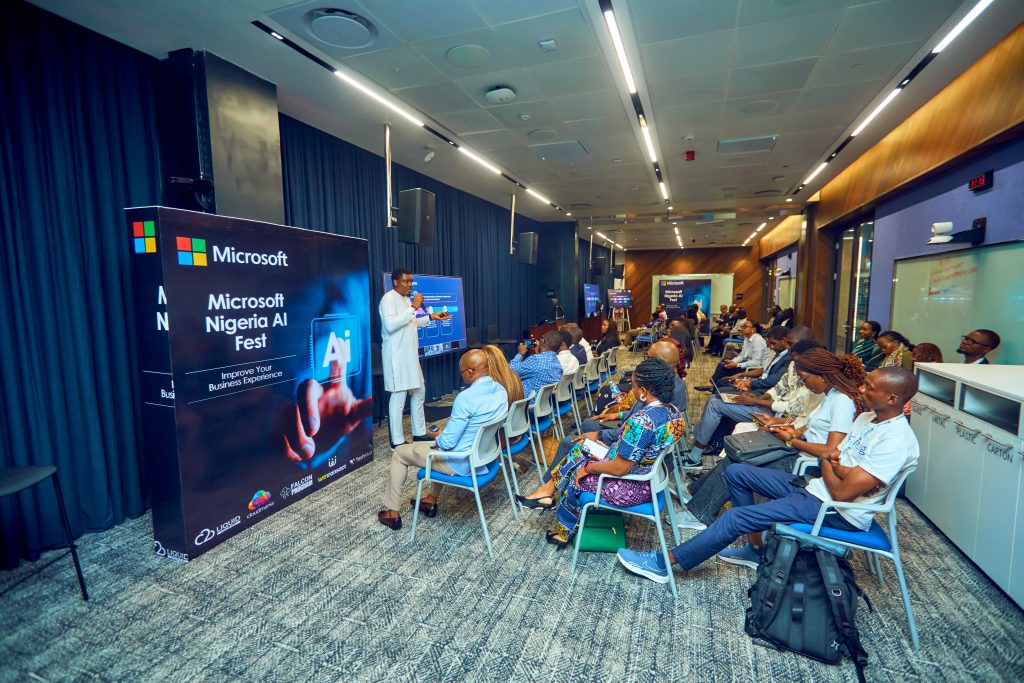
In a high-profile ceremony in Abuja, Microsoft’s AI investment in Nigeria was unveiled with ambitious multi-year commitments focused on three core pillars.
Infrastructure Development: Initially, Microsoft plans to construct hyperscale data centers in Lagos, designed to provide cloud computing capacity for West Africa. Consequently, these Azure facilities will significantly reduce latency for African users, a game-changer for developers who’ve struggled with 300-500ms delays when data centers were only in Europe.
Skills Training Initiative: Additionally, the Microsoft AI investment in Nigeria includes a commitment to train 1 million Nigerians in AI and cloud computing over three years. According to Microsoft’s official announcement, this represents their largest skills initiative in Africa to date.
Government Partnerships: Finally, Microsoft will collaborate with federal and state governments to digitize public services and implement AI solutions in healthcare, education, and agriculture sectors.
Microsoft CEO Satya Nadella emphasized this reflects the company’s “long-term commitment to Africa’s digital future.” Indeed, the timing aligns perfectly with the global AI boom, where infrastructure access increasingly determines who participates in the AI economy versus who merely watches from the sidelines.
The Major Opportunities
Infrastructure Development: Solving the Latency Problem
For years, African developers have been handicapped by infrastructure limitations. Consequently, every API call, every AI inference, and every cloud operation suffered from latency because data centers were thousands of miles away. Therefore, the Microsoft AI investment in Nigeria addresses this fundamental challenge.
Microsoft’s local data centers will fundamentally change this landscape:
- Reduced latency from 300-500ms to under 50ms for cloud services
- Lower costs due to reduced international bandwidth requirements
- Data sovereignty options for government and regulated industries
- Regional impact extending beyond Nigeria to serve Ghana, Senegal, and West Africa
While Lagos gets primary focus, this infrastructure could support emerging hubs like Jos, Plateau State, which is becoming Nigeria’s secret AI hub. As a result, Nigerian startups building AI applications can finally compete on infrastructure with Silicon Valley counterparts.
Skills Training: Pathway to High-Paying Careers
Meanwhile, Microsoft’s AI investment in Nigeria pledges to train 1 million people, representing the largest corporate skills initiative in African tech history. For context, our analysis of AI careers and salaries in Africa shows certified cloud architects earn $30,000-$80,000 annually in Nigeria, significantly above median salaries.
The training will likely include:
- Microsoft Azure AI certifications (AI-900, AI-102)
- Data science and machine learning fundamentals
- Cloud architecture and infrastructure management
- AI ethics and responsible development
Similar to Google’s free career certificates initiative, this could democratize access to high-paying tech careers. Furthermore, this aligns with broader AI job trends in Africa, where demand for AI talent far exceeds supply.
However, the critical question remains: Will training translate to actual employment, or will Nigeria have thousands more skilled but unemployed graduates?
Startup Ecosystem Boost
Building on how Nigerian startups are already using AI tools, the Microsoft AI investment in Nigeria could supercharge local innovation. Subsequently, access to Azure means Nigerian startups can:
- Build sophisticated AI products without massive infrastructure investment
- Access cutting-edge models like GPT-4 and custom AI services
- Scale globally from day one with enterprise-grade infrastructure
- Compete for international funding on an equal footing
Additionally, the infrastructure complements the best AI tools already available to Africans, creating a comprehensive development stack. Moreover, Microsoft has hinted at startup support programs, including Azure credits and venture funding through its M12 fund.
Economic Multiplier Effects
Beyond the tech sector, Microsoft’s AI investment in Nigeria creates substantial economic impacts:
- Direct jobs: 5,000-10,000 in data center operations and maintenance
- Indirect employment: 50,000+ in construction and support services
- GDP contribution: Estimated 0.5-1% boost over five years
- Foreign exchange savings: Reduced need for offshore cloud services
For individuals, this creates pathways to use AI tools to earn money in Africa through freelancing, consulting, or AI-powered businesses.
The Critical Gaps: What’s Missing
Local Innovation vs. Foreign Control
Despite the benefits, the Microsoft AI investment in Nigeria has a fundamental limitation: it creates infrastructure that Nigerian businesses will rent, not own. Consequently, every Azure subscription generates revenue flowing back to Redmond, Washington.
This raises a question we’ve explored: Is AI in Africa a hustler’s tool or shortcut? Moreover, are we building genuine technological capability or becoming sophisticated consumers of foreign technology?
What’s missing:
- Investment in Nigerian AI research labs or universities
- Support for open-source AI development by local developers
- Partnership with Nigerian cloud providers
- Technology transfer commitments
In contrast, China’s approach required foreign tech companies to partner with local firms and share technology. According to the Brookings Institution’s analysis of tech investment in emerging markets, effective tech partnerships require explicit technology transfer mechanisms—something largely absent in the Microsoft AI investment in Nigeria.
Without these elements, Nigeria builds dependency rather than capability. Ultimately, in 10 years, will Nigeria have its own AI platforms, or just be very good at using Microsoft’s?
Digital Divide: Beyond Lagos
Although the Microsoft AI investment in Nigeria focuses on Lagos and possibly Abuja, 70% of Nigerians live in rural areas or secondary cities. Therefore, this geographic concentration raises serious equity concerns.
Regional hubs like Plateau State’s tech ecosystem need equal access. However, historically, big tech investments concentrate benefits in already-privileged areas.
Missing elements:
- Rural internet connectivity plans
- Training centers in secondary cities beyond Lagos and Abuja
- Affordability guarantees for small Nigerian businesses
- Local language support for non-English speakers
Consequently, the risk is widening inequality as Lagos tech workers prosper while rural Nigerians remain disconnected from the AI economy.
Skills-to-Employment Gap
While training 1 million people sounds impressive, training doesn’t equal employment. In fact, Nigeria already has thousands of computer science graduates who can’t find matching jobs.
We’ve explored the job risks versus growth opportunities of AI in Africa. Specifically, without deliberate job creation strategies, training creates a more skilled unemployed population.
What’s missing:
- Commitment to hiring Nigerian AI talent for Microsoft’s projects
- Requirements for Azure customers to employ local developers
- Partnership with Nigerian companies that can absorb trained talent
- Startup funding for training graduates
The World Economic Forum’s Future of Jobs Report emphasizes that successful reskilling programs must include employment pathways, not just certifications.
Data Sovereignty Concerns
When Nigerian businesses and government use Azure, their data lives on Microsoft’s infrastructure. Physically in Nigeria, yes, but legally? That’s far more complex.
These governance and regulation concerns remain unaddressed in Microsoft’s AI investment in Nigeria:
- Can Nigeria access data in emergencies without Microsoft’s permission?
- What happens if U.S. law enforcement requests data under the CLOUD Act?
- Who owns AI models trained on Nigerian data?
- How is data protected under Nigerian vs. U.S. privacy laws?
The gap: No clear data sovereignty framework exists. Therefore, Microsoft operates under U.S. jurisdiction, creating potential conflicts with Nigerian law.
Without proper safeguards, the 6 major AI threats facing Nigeria could intensify, particularly around surveillance and data exploitation.
Environmental Sustainability
Hyperscale data centers consume enormous amounts of electricity and water. In a country with unreliable, expensive power, where does Microsoft’s AI investment in Nigeria fit environmentally?
Missing commitments:
- Renewable energy guarantees for data centers
- Transparency about water usage in water-scarce regions
- Plans for cooling systems adapted to Nigeria’s climate
- Assessment of grid capacity to support data center loads
According to Nature’s analysis of data center environmental impact, hyperscale facilities can consume as much power as small cities. Although Microsoft has global sustainability commitments, applying them in Nigeria requires specific renewable energy investments.
Policy and Regulatory Vacuum
Perhaps the biggest gap in Microsoft AI investment in Nigeria is regulatory oversight. Currently, Nigeria lacks comprehensive AI governance, enforced data protection, and tech sector regulation. Therefore, Microsoft’s investment proceeds in this vacuum.
What’s needed but absent:
- National AI strategy that aligns with Microsoft’s investment
- Data localization requirements ensuring Nigerian data sovereignty
- Local content requirements (% Nigerian employees, contractors)
- Technology transfer obligations
- Tax incentives tied to social impact, not just investment size
The European Union’s approach to tech regulation makes market access conditional on regulatory compliance and social benefits. Clearly, Nigeria has leverage but isn’t using it.
What Different Stakeholders Should Do
For Nigerian Developers
Tools like ChatGPT are already empowering Nigerian youth, and Microsoft AI investment in Nigeria accelerates that trend significantly.
Immediate actions:
- First, get certified in Microsoft Azure AI (AI-900 is the entry point)
- Then, build portfolio projects using Azure credits
- Next, join Nigerian AI developer communities
- Finally, consider specialization in high-demand areas like MLOps or computer vision
Additionally, developers can build AI automation agencies serving Nigerian businesses that need AI implementation.
For Startups
For AI startups across Africa, this represents access to enterprise infrastructure—if Microsoft includes generous startup programs.
Strategic moves:
- Initially, negotiate hard for Azure credits and enterprise support
- Subsequently, build on Azure if targeting West African markets (latency advantage)
- Meanwhile, consider hybrid strategies: Azure for infrastructure, local solutions for differentiation
- Ultimately, think regionally from day one
For Government
The Microsoft AI investment in Nigeria is a test of the government’s ability to negotiate terms benefiting citizens, not just corporations.
Priorities:
- Technology transfer: Require Microsoft to establish AI research labs in Nigerian universities
- Local hiring: Mandate specific percentages of Nigerian employees
- Data sovereignty: Pass comprehensive data protection laws
- Regional balance: Requires investment beyond Lagos and Abuja
Importantly, the government has leverage—access to 200+ million people is valuable. Therefore, it should use it strategically.
For Students and Career Switchers
Understanding which AI jobs pay the most helps with strategic career planning.
Pathway:
- Months 1-2: First, complete Azure AI Fundamentals (AI-900)
- Months 3-4: Then, build three portfolio projects solving African problems
- Months 5-6: Next, specialize (computer vision, NLP, MLOps)
- Months 7-12: Finally, contribute to open-source, attend events like Jos Tech Fest, and apply for jobs
To begin, start by mastering AI tools for small businesses to understand practical applications.
The Bigger Picture: Three Possible Futures
The Microsoft AI investment in Nigeria accelerates trends we’ve documented in our AI in Africa overview. Indeed, the evolution of AI for African youth enters a new phase where infrastructure isn’t the primary barrier.
Optimistic Scenario: Infrastructure enables startups, startups create jobs, jobs attract talent, and talent builds more startups. Consequently, by 2030, Nigeria will become a legitimate AI hub producing global companies.
Realistic Scenario: Some benefits accrue, better infrastructure, more trained developers, and a few successful startups. However, most value flows to Microsoft, inequality widens, and Nigeria remains a market rather than an innovator.
Pessimistic Scenario: Training doesn’t lead to jobs, startups can’t afford Azure pricing, data centers mainly serve foreign companies, and dependency deepens.
Ultimately, which future we get depends on decisions made in the next 2-3 years.
Conclusion: Opportunity Meets Accountability
The Microsoft AI investment in Nigeria is significant. the largest of its kind in Africa, with genuine potential to accelerate tech development. Indeed, the infrastructure, training, and ecosystem support could create opportunities for millions.
However, we must be clear-eyed about the gaps. Without deliberate policies ensuring technology transfer, local ownership, and inclusive benefits, the Microsoft AI investment in Nigeria primarily serves Microsoft’s commercial interests while leaving Nigeria as a sophisticated consumer rather than a creator.
The next 12-24 months are critical. Will the government negotiate strong terms? Will universities demand research partnerships? Will startups build genuinely innovative companies? Will training lead to real employment?
Therefore, the Microsoft AI investment in Nigeria should be a catalyst for African AI capability, not a substitute for it. The infrastructure is coming. The training is available. The opportunity is real.
Whether Nigeria and Africa seize it depends on the choices we make today.
What’s your take? Will the Microsoft AI investment in Nigeria genuinely benefit local tech, or is this primarily market expansion? Share your thoughts below.
Take Action
- Stay informed: Subscribe to Creative Tech Africa for ongoing analysis of the Microsoft AI investment in Nigeria
- Get trained: Explore Microsoft Learn for free AI courses
- Build something: Use this opportunity to create AI solutions for African problems
- Hold leaders accountable: Demand transparency from the government and Microsoft
Explore our AI in Africa pillar page and comprehensive AI tools guide for more resources.