Last updated: September 9, 2026. Case numbers in this story change daily. We’ve dated every figure below; check that date before you share it.
The Plateau State Government has closed every public and private primary and secondary school across the state, effective Monday, September 7, 2026, until further notice. That includes schools that had already resumed for the new academic session. Commissioner for Information and Communication Joyce Ramnap announced the directive on Saturday, September 5, under Governor Caleb Manasseh Mutfwang, citing suspected diphtheria cases in Jos North, Jos South, Bassa, and Wase Local Government Areas. As of September 9, 2026, Plateau’s Commissioner for Health, Dr Nicholas Ba’amlong, put suspected cases at roughly 301, with 25 deaths, up sharply from the 143 suspected cases and 23 deaths reported just days earlier, on September 2.
If you’re a parent, teacher, or school administrator in Jos trying to figure out what this means for your family or your school, here’s what’s actually known right now.
What did the Plateau State Government actually announce?
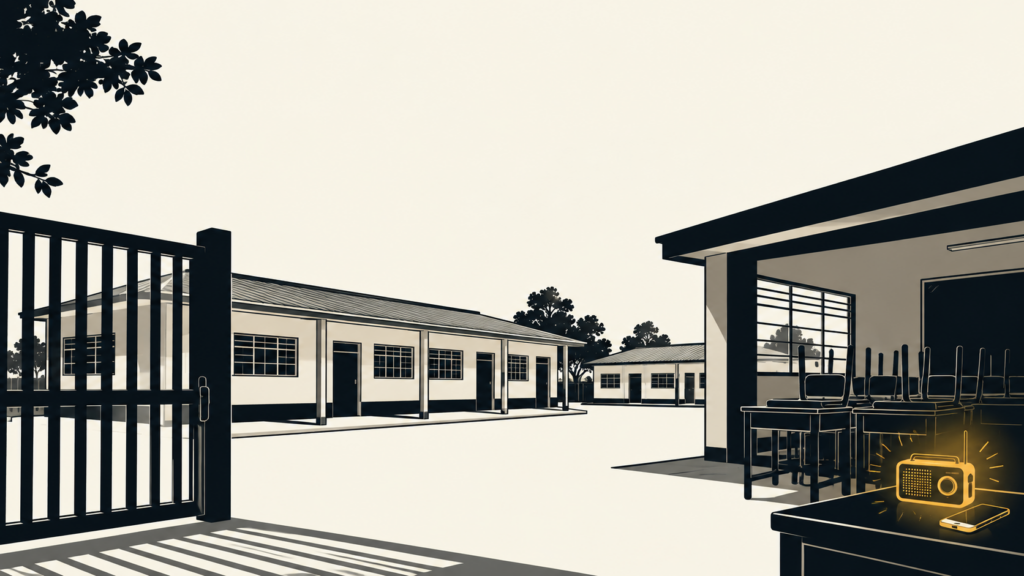
The directive is simple and broad: every public and private primary and secondary school in Plateau State is to close, whether or not it had already resumed classes for the term. It takes effect Monday, September 7, 2026, and the government has not given an end date; schools stay closed “until further notice.”
The order names four affected Local Government Areas: Jos North, Jos South, Bassa, and Wase. Jos North’s Rikkos community has been identified by health authorities as the area hardest hit. School proprietors, administrators, teachers, parents, and guardians are all directed to comply and to keep pupils and students at home for the duration.
This is a precautionary measure, not a response to a confirmed epidemic inside schools specifically; it’s aimed at keeping children out of the kind of crowded, close-contact settings where a respiratory infection like diphtheria spreads easily, while health authorities work to contain the outbreak in the affected communities.
What is diphtheria and how does it spread?
Diphtheria is a bacterial infection caused by Corynebacterium diphtheriae. According to the Nigeria Centre for Disease Control and Prevention (NCDC), the bacteria produce a toxin that attacks the nose, throat, and tonsils, and in severe cases can damage the heart, nerves, and kidneys. A hallmark sign is a thick, greyish membrane that can form at the back of the throat or in the nose, which can make breathing difficult.
It spreads mainly the way a cold or flu does: through respiratory droplets when an infected person coughs, sneezes, or speaks in close contact with others, and less commonly through contact with infected skin sores. That’s exactly why crowded classrooms are a risk factor health authorities want to avoid right now.
The disease is vaccine-preventable. The World Health Organization (WHO) notes that even with treatment, diphtheria carries a case fatality rate of roughly 5- 10%, and that figure rises sharply without prompt access to antitoxin and antibiotics.
What are the symptoms parents should watch for?
Health authorities point to four main warning signs:
– Sore throat
– Fever
– Swollen glands in the neck
– Difficulty breathing
If your child develops any of these symptoms, don’t wait it out at home; take them to the nearest primary health centre or hospital immediately. Early treatment makes a significant difference in outcomes, and delayed presentation has been flagged repeatedly by Plateau health officials as a factor driving the current death toll.
This article is for general information only and isn’t medical advice. For diagnosis, treatment, or any decision about your child’s health, talk to a qualified health worker.
How does this compare to Nigeria’s 2023 outbreak?
Nigeria’s 2022- 2023 diphtheria outbreak was the country’s worst in over a decade, according to the NCDC. From the outbreak’s start through December 24, 2023, the country recorded 22,293 suspected cases across 36 states and 297 Local Government Areas. Of those, 13,387 (60.1%) were confirmed. Kano State accounted for the large majority of confirmed cases (10,085), and Plateau recorded 31 confirmed cases in that wave, a fraction of what health authorities are now tracking here in a single, more localized outbreak three years later. Roughly 67.6% of confirmed cases nationally were children between 1 and 14 years old.
The current 2026 outbreak sits inside a wider national pattern. On September 5, 2026, NCDC’s Principal Health Communication Officer, Michael Okali, told Channels Television that eight states, Kano, Kaduna, Katsina, Borno, Bauchi, Plateau, Sokoto, and Zamfara, account for about 98% of all confirmed diphtheria cases currently recorded in Nigeria. Okali also said roughly 68% of confirmed cases nationally involve people who were never vaccinated against diphtheria, with another 28% unsure of their vaccination status, meaning the overwhelming majority of confirmed cases involve people who either skipped the vaccine or don’t know if they got it.
That national data doesn’t tell you exactly what’s happening inside Plateau’s four affected LGAs day to day, but it does show this isn’t an isolated event; it’s part of a recurring pattern tied closely to gaps in routine childhood immunization.
When will Plateau schools reopen?
There’s no honest way to answer this precisely, because the state government hasn’t announced one. The directive is open-ended; schools remain closed “until further notice.”
In practice, a reopening decision like this typically follows sustained evidence that new suspected cases are slowing or stopping in the affected LGAs, and confirmation from health authorities that the immediate risk in and around schools has eased. Neither of those conditions has been publicly confirmed as of this writing. We won’t guess at a date, and you should treat any specific reopening date circulating on social media as unverified unless it comes directly from the Plateau State Government or the Ministry of Education.
The most reliable way to get the actual date is to watch official channels directly; we’ve listed them at the end of this article.
How do schools keep teaching when campuses are closed?
This isn’t the first time Nigerian schools have had to keep teaching without a functioning classroom. The COVID-19 closures of 2020 forced schools nationwide to improvise, and what worked then offers a realistic menu of options now, none of them perfect, all of them with trade-offs worth knowing about.
Radio and broadcast lessons. Several state governments ran curriculum-based lessons over radio during COVID-19 closures. Radio reaches households without smartphones or data, works during power cuts, and needs no new skills from parents. Its limit is that it’s one-directional; there’s no way for a teacher to know whether a child actually understood the lesson, and no way for a struggling student to ask a question.
Printed learning packs. Some schools and state education boards distributed physical worksheets and reading materials through community or religious structures. This works well in areas with limited connectivity and doesn’t depend on a device at all. It’s slower to distribute and collect, and it puts the burden of getting materials to and from students on already-stretched school staff or community volunteers.
WhatsApp-based delivery. Many individual teachers and schools simply ran their own class groups over WhatsApp, sharing assignments, voice notes, and scanned notes, and taking questions in real time. It’s familiar, cheap relative to other digital options, and mirrors how a lot of Nigerian households already communicate. It still requires a smartphone and data in the household, and puts a lot of informal coordination weight on individual teachers.
Structured e-learning platforms. A number of Nigerian-built platforms offer curriculum-aligned video lessons, notes, and practice questions that schools can roll out to students directly, with some level of progress tracking for teachers and administrators. These generally need a device and either data or downloaded content, but they can offer more structure and feedback than a WhatsApp group alone.
None of these fully replaces a physical classroom, and the right mix depends heavily on what devices and connectivity families in a given school community actually have. Most schools that have managed a closure well have combined more than one of these approaches rather than betting on a single channel.
What a distance-learning setup looks like for a Plateau school
If a school in Jos or one of the affected LGAs is weighing a more structured option alongside radio, printed packs, or WhatsApp groups, it’s worth understanding roughly what that setup involves before committing to one.
A structured platform, for instance, African Intelligence’s ROS, one of several Nigerian-built options in this space, generally works by giving a school an account it can roll out to its student roster, with curriculum-aligned lesson content and some way for teachers or administrators to see who’s engaging with the material and who isn’t. That’s genuinely useful during an indefinite closure, because it gives a school more visibility than a scattered set of WhatsApp groups would.
It also comes with the same basic requirements as any digital option: students need either a smartphone or another internet-capable device, and either data or downloaded content, to actually use it. For a school where a meaningful share of families don’t have consistent access to either, a platform like this works best as one layer of a broader continuity plan, alongside printed materials or radio for students who can’t get online, rather than as the whole plan.
One thing worth being direct about: no learning platform, however well designed, does anything to contain the outbreak itself. Its job is keeping learning going while schools are shut, nothing more. The decisions that actually contain diphtheria are being made by health authorities, not by any software.
School administrators comparing continuity options can typically request a requirements sheet directly from a platform provider to check device, data, and setup needs against what their own student population actually has before making a decision.
Frequently asked questions
When will Plateau schools reopen?
No date has been announced. The closure that began September 7, 2026, is open-ended and will likely end once health authorities confirm suspected cases in the affected LGAs are declining and the risk to schools has eased. Watch official government and Ministry of Education channels for the confirmed date rather than unverified social media posts.
Is diphtheria vaccine-preventable?
Yes. Diphtheria is preventable through routine childhood immunization, typically given as part of the DTP (diphtheria-tetanus-pertussis) or pentavalent vaccine series. NCDC data from the current national outbreak show that most confirmed cases involve people who were never vaccinated or whose vaccination status is unknown, which is why health officials are pushing routine immunization alongside outbreak response.
How do you keep children learning during a school closure?
Nigerian schools have used a mix of approaches during past closures: radio and broadcast lessons, printed worksheets distributed through communities, teacher-run WhatsApp groups, and structured e-learning platforms. Most schools that manage a closure well combine more than one of these, matched to what devices and connectivity their own students actually have access to.
Where to get official updates
For verified, current information, including any announcement on when schools will reopen, go directly to the Nigeria Centre for Disease Control and Prevention (ncdc.gov.ng) and the Plateau State Ministry of Health, rather than relying on secondhand reports or social media.
This article is for general information only and is not medical advice. If your child shows symptoms of diphtheria, take them to the nearest health facility immediately rather than waiting for guidance online.
Last updated September 9, 2026. Case figures will very likely have changed again by the time you’re reading this; always check them against the current NCDC or Plateau State Ministry of Health update.