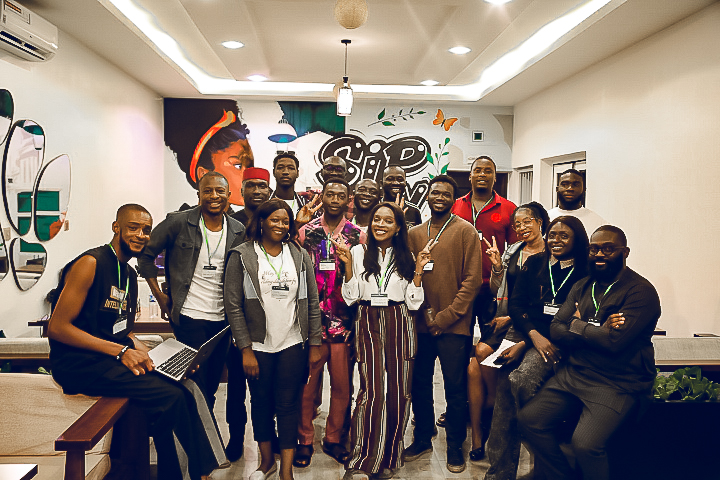
For most of the last century, Jos was Tin City — the plateau that fed the world its tin, back when Nigeria ranked among the biggest producers on the planet and people crossed the whole country to work here. The big mines have long gone quiet. But on Friday evening, in a room at Sip City, a different kind of mining started. This time the ore was people. Tin City Founders 001 pulled the builders of Jos and Plateau into one room — founders who’d been grinding in silence, in the same city, sometimes on the same street, and had never met. For three hours, nobody built alone.
It was the first of its kind here: a free founders’ mixer, built by founders, for founders. No headline sponsor logo swallowing the room. No panel of “thought leaders” talking down from a stage. Just the people actually building things in this city, finally in the same place at the same time.
Thirty founders put their names down — and the spread said everything. Agritech out of Bokkos. Web3, fintech, hospitality, media, entertainment, creative tech from across Jos and Plateau. Idea-stage builders in the same circle as founders already scaling. One room, and barely a sector missing.
The awkward hello was solved before anyone spoke
Anyone who’s been to a “networking event” in Nigeria knows the dead first ten minutes — everybody clutching a drink, scanning the room, nobody wanting to be the first to say something.
Tin City Founders designed that away. Every founder got a name tag with a line under their name: “Ask me about ___.”One person’s said ask me about selling fresh fruits and vegetables. Another’s, ask me about raising from VC’s in Nigeria. Suddenly you’re not walking up to a stranger — you’re walking up to a conversation that’s already started. The room warmed up in minutes.
Pass the Mic: origin stories, not pitches
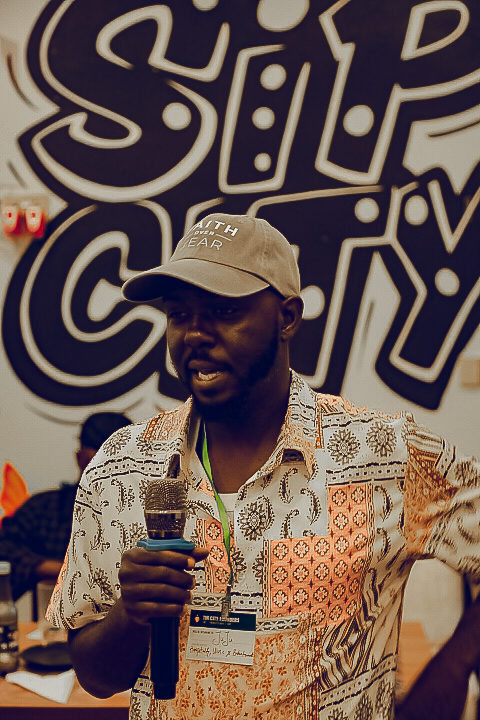
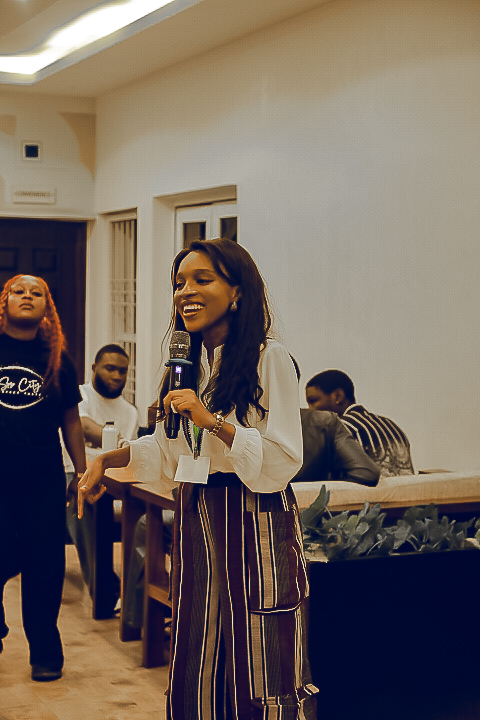
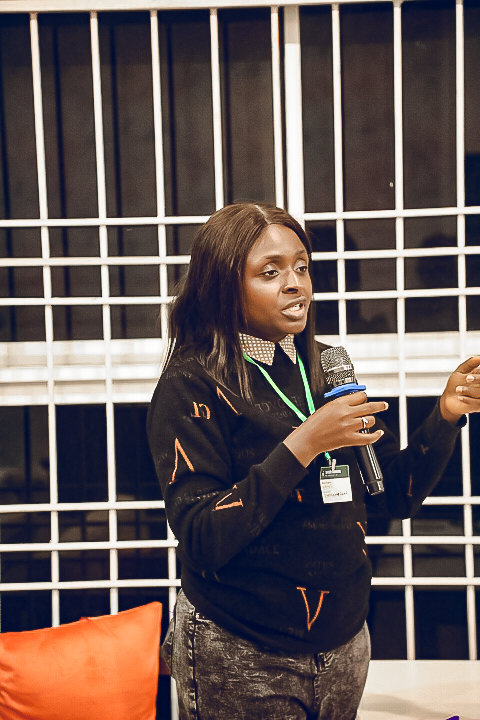
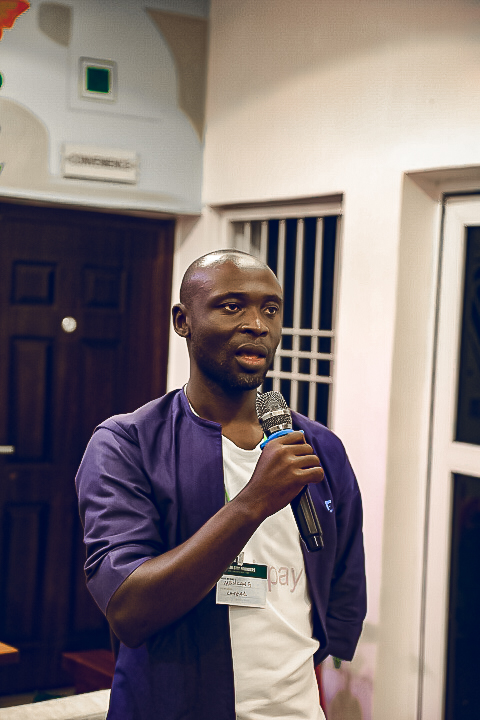
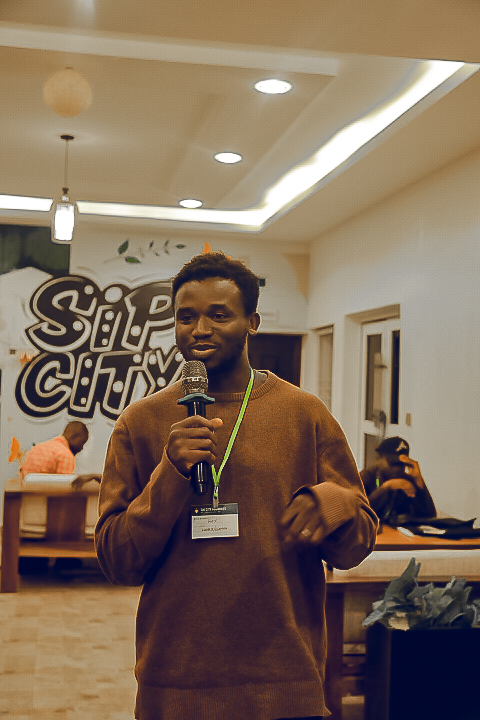
Then founders told their stories — real ones. Not the polished elevator pitch, but why they started, what nearly broke them, the month they almost gave up.
You could see it land. Ask people afterward what they were carrying home and the words came back plain and heavy: courage. Determination. Inspiration. One founder wrote that they left with “a challenge to dig deeper into my own thoughts.” Nobody says that after a pitch competition. That’s the thing about a room of founders who’ve actually done it — the truth is more useful than the highlight reel.
Speed-Founding: meet your whole city in one sitting
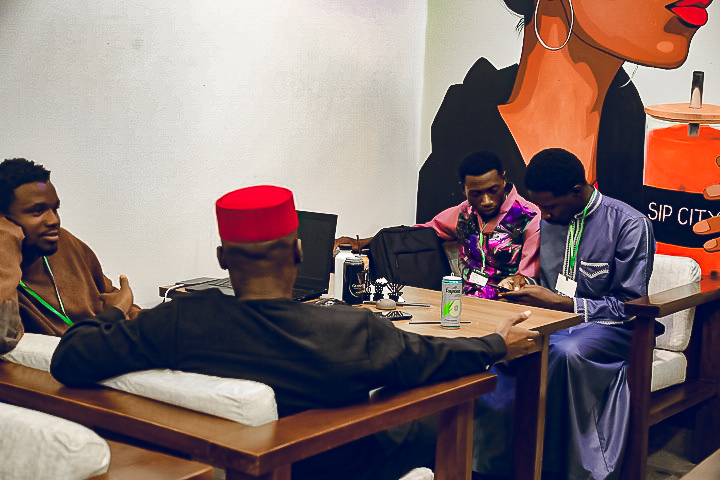
Next came Speed-Founding — a timer on the screen, rapid one-on-ones, a bell, switch, go again. In the space of one segment, founders met more of their city’s builders than most had in the previous year. Designers met the food founders who needed them. Students sat across from people three years ahead of exactly where they’re trying to go.
By this point the room didn’t feel like an event anymore. It felt like a scene discovering it existed.
The rule that changes everything: give before you take
Here’s the part that makes Tin City Founders different from every mixer you’ve been dragged to.
Most rooms run on take. Everyone’s quietly fishing — for a client, an investor, a favour — and because everyone can feel it, everyone guards. You leave with a stack of contacts and follow up with none of them.
Tin City Founders runs on one rule, printed on the name tags and said out loud: give before you take. In the Give & Ask, before you’re allowed to ask the room for anything, you offer something first. A skill. A warm intro. A hard lesson you paid for so someone else doesn’t have to.
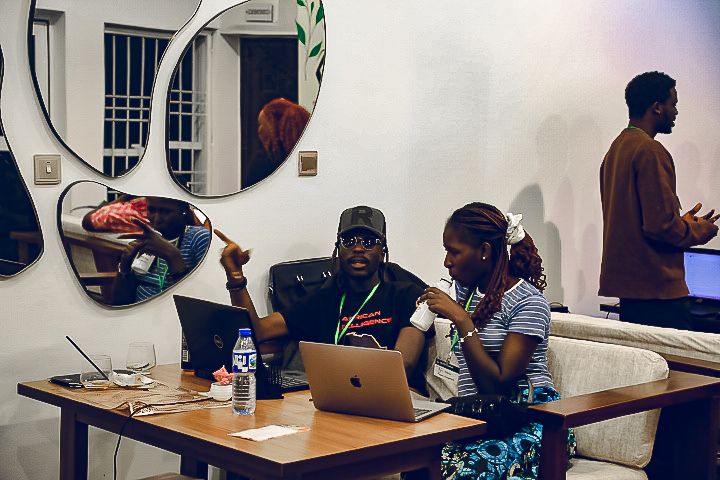
And it worked. A photographer in the room — a founder named Kangsuk — spent the night giving: free professional headshots to founders who’d never had a decent one, plus honest advice and encouragement to anyone who pulled up a chair. One founder still couldn’t believe it the next day: “I got a headshot photoshoot for free!!” Another table quietly turned into a live collaboration between three creative-tech outfits — RexC4, African Intelligence, and the BlueHouse crew. Nobody brokered those deals. The rule did.
When we asked afterward, five of every seven founders who filled out our feedback said the same thing: I gave, and I got something. Six of seven walked away with at least one connection worth following up on. When the whole room gives first, asking stops being begging and becomes matching. That’s the engine — and it’s why people left with actual intros and next steps, not just Instagram handles they’d never open again.
Why “Tin City” — and why it matters now
The name isn’t decoration. Jos mined tin and that tin built the city — the railways, the schools, the cosmopolitan town that pulled people in from everywhere. Then the tin ran down and a lot of the country moved on.
But the plateau was never only about what was under the ground. The value now is the people on top of it. So the metaphor is simple: we used to mine tin. Now we mine ideas. Same plateau, same knack for building something the rest of the country notices — pointed at a different kind of wealth.
What this means for you if you’re building in Jos
If you’ve been telling yourself you have to japa — to Lagos, to Abuja, to abroad — just to find your people, this is the counter-argument. The talent is here. It was just scattered, and now there’s a room that gathers it.
You don’t need to be “a proper startup” to belong. Whether you’re pre-idea, pre-launch, or already scaling — whether you code, cook, design, teach, or trade — if you build something, there’s a seat for you. The one thing everyone in that room shared wasn’t a sector. It was the decision to stop building alone.
“I’m grateful to have connected with a network of like-minded individuals who will support my growth and help me thrive.” — a Plateau media & agriculture founder, in her feedback
Tin City Founders — FAQ
What is Tin City Founders? A free founders’ mixer in Jos, Plateau State — a room where the people building things in this city meet, give before they take, and leave with real connections. It’s run by founders, for founders, and it’s designed to become a monthly rhythm.
Who can attend? Any founder or builder in Jos and Plateau — tech, business, creative, or student. You don’t need funding, a registered company, or a finished product. You need to be building something and willing to give before you take.
Is it free? Yes. Free to attend, with limited seats each time — so RSVP early, because the room fills.
When is the next one? Tin City Founders 002 lands in the first week of August. RSVP at luma.com/msc5ggqy — the first room filled and seats are limited, so grab yours early.
How do I join the community? Join the WhatsApp community here: chat.whatsapp.com/ImQb9cgjvqy9EBv4oLlFHy. Introduce yourself, say what you’re building and one thing you can give — and bring one other founder with you. That’s how the room grows. You can also follow @tincity_founders on Instagram.
Be in the room where it started
Something real started at Sip City on Friday — not a conference, not a photo op, a beginning. A city full of people who’d been building in the dark found out they were never actually alone.
Here’s how we know it landed: every single founder who filled out our feedback said they’d be back. Not one exception. 001 is done. There will be an 002, and a 012, and the founders who show up early will be the ones who tell the story later of how it began. If you build anything in this city, that’s your invitation.
Don’t build alone. Be in the room where it started.
Tin City Founders 002 is the first week of August — RSVP on Luma, join the WhatsApp community, and follow @tincity_founders. Building something in Jos or Plateau? Tell us in the comments — what you’re making and one thing you could give another founder.



1 comment
[…] Ambassador Nigeria: $3,600 Stipend (2026) AI for WordPress: The Complete Guide for African… Tin City Founders: The Night Jos Stopped Building… A.I Didn’t Steal Jobs — It Exposed Who… The New School Teacher: How AI Is Helping… AI […]