You’ve got a client waiting, a small budget, and six AI image tools that all promise “realistic” photos. Pick wrong, and you burn dollars, credits, and mobile data on pictures you can’t use.
This post is for Nigerian and African freelancers, creators, small business owners, marketers, and students who want believable AI images without overspending. An AI image generator is a tool that turns a written instruction, called a prompt, into a picture.
We’re unpacking one YouTube video by Roboverse that ran six tools through the same four prompts. Know this first: it’s a single reviewer, sponsored video. Higgsfield sponsored it, and the creator uses affiliate links, which can earn a commission when viewers sign up. Higgsfield also makes one of the six tools, Soul 2.0. We didn’t run these tests. We explain them, flag what’s missing, and add one result of our own.
Below you’ll find the scores, the credit costs, and which tool fits which job.
Table of contents
- Which six AI image generators did the video compare?
- How did the six tools do in four realistic photo tests?
- What are the pros and cons of each tool?
- Which tool should you choose for your kind of work?
- What are the limits of this comparison?
- What’s our verdict?
- Frequently asked questions
Which six AI image generators did the video compare?
Here’s each tool in plain words, with a link to its official site.
- Seedream 5.0 Pro: an image model from ByteDance, the company behind TikTok. It creates and edits images.
- GPT Image 2.5: OpenAI’s image model. The video used the Sunburst version, OpenAI’s slower, more precise tier.
- Higgsfield Soul 2.0: Higgsfield’s own image model, made for fashion-aware, realistic photos.
- Nano Banana 2.1: Google’s image generation and editing model.
- Flux 3 Image: an image model from Black Forest Labs, a German AI company.
- Grok Imagine 2.0: xAI’s image model, available in Grok.
The reviewer ran all six inside one platform, Higgsfield. That matters later, because the credit costs are Higgsfield’s credits, not each tool’s own prices.
Key takeaway: Six tools, one platform, one reviewer. Treat the results as a starting point, not a verdict.
How did the six tools do in four realistic photo tests?
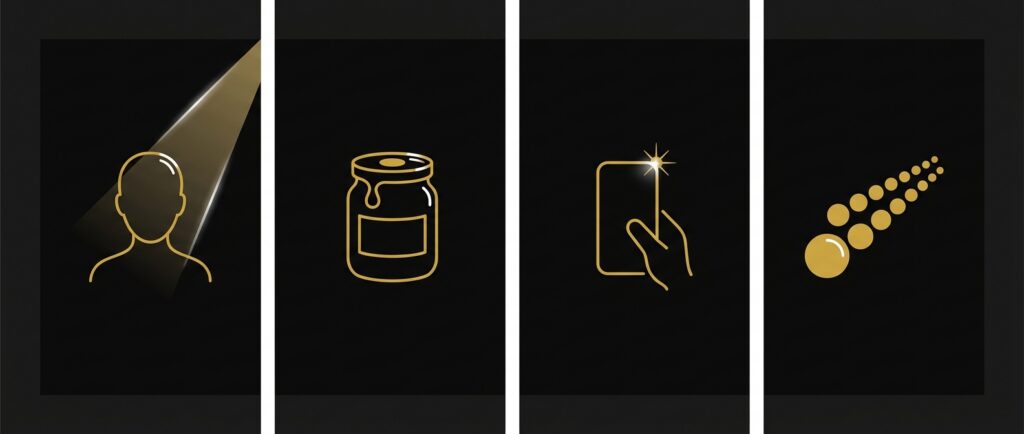
Roboverse gave every tool the same four prompts. He scored each result out of 10 for realism and for how closely it followed the prompt, so the top total is 40. These are his opinions, not lab results.
Which tool made the most believable portrait?
The prompt asked for a close-up of a woman in her late 50s, lit by hard window light, with freckles, a tired half-smile, and fingers interlaced under her chin. GPT Image 2.5 won with 8.5: visible wrinkles, freckles and sunspots, and side light like a real window. Nano Banana 2.1, Seedream 5.0 Pro and Soul 2.0 each got 7. Seedream’s smile was too warm and its light too harsh. Soul looked like a real selfie, but the hands sat flat on the cheeks. Flux 3 Image got 5.5 because its freckles looked painted on. Grok Imagine 2.0 got 5 because the skin was too smooth.
Which tool got a product label and price sticker right?
This one matters if you sell honey or snacks. The prompt: a spoon with honey dripping into a jar, a label with five lines of text and a barcode, and a handwritten price sticker on the lid. Seedream 5.0 Pro scored 9. Every label line read correctly, and it looked like a morning phone photo in a kitchen. Nano Banana 2.1 got 8.5, with the label and barcode right, though both hands came in from the same side. GPT Image 2.5 got 8, but added a fruit bowl, mugs, and a plant nobody asked for. Flux 3 Image got 7 because the sticker price was too faded to read. Soul 2.0 got 6.5 for weaker label writing and honey drip. Grok Imagine 2.0 got 5: the label was right, but it looked like an ad and had an extra hand on the jar.
Which tool made a phone photo look properly unpolished?
The prompt: a quick hiking photo of three friends and a dog, a trail sign with text, sun in the lens, and a thumb in the corner. It has to look a little bad on purpose. Seedream 5.0 Pro and Soul 2.0 tied at 8. Seedream nailed the harsh sun, blown-out sky, and blurry thumb. Soul looked raw and real, but the sign text came out garbled. GPT Image 2.5 got 7.5, Nano Banana 2.1 got 7 (too sharp, like a postcard), Grok Imagine 2.0 got 6, and Flux 3 Image got 5.
Which tool coped best with a crowd?
The prompt: a crowded airport security line early in the morning, with a man removing his shoes, a crying child, an officer searching a suitcase, and a yellow sign. Soul 2.0 took the round with 8.5, the top score in the whole test. Hands and faces held up, and the sign was readable. GPT Image 2.5 and Seedream 5.0 Pro each got 7. Nano Banana 2.1 and Grok Imagine 2.0 each got 6, and Flux 3 Image got 5.
Who won overall, and why was there a tiebreak?
| Tool | Portrait | Product label | Phone photo | Crowd | Total (out of 40) |
|---|---|---|---|---|---|
| Seedream 5.0 Pro | 7 | 9 | 8 | 7 | 31 |
| GPT Image 2.5 | 8.5 | 8 | 7.5 | 7 | 31 |
| Higgsfield Soul 2.0 | 7 | 6.5 | 8 | 8.5 | 30 |
| Nano Banana 2.1 | 7 | 8.5 | 7 | 6 | 28.5 |
| Flux 3 Image | 5.5 | 7 | 5 | 5 | 22.5 |
| Grok Imagine 2.0 | 5 | 5 | 6 | 6 | 22 |
Source: single reviewer, sponsored video. Scores are Roboverse’s, not ours.
Seedream and GPT Image tied at 31. Roboverse placed Seedream first because it won the honey jar test and shared the top score on the hike, while GPT Image only won the portrait. Soul came third on 30. Nano Banana came fourth because it never failed a prompt but never won one. Flux and Grok finished last because both kept a plastic look in most tests.
His picks: GPT Image 2.5 for portraits, Seedream 5.0 Pro for product photos with text, and Soul 2.0 for casual phone photos and crowds.
Key takeaway: No tool won every test. The best pick depends on the picture you need.
What do the credit costs mean for your budget?
A credit is a unit you spend each time you generate an image. That’s credit-based billing. In the video, Soul 2.0 costs 0.125 credits per image, while the other five cost between 2 and 3. Divide 2 by 0.125, and you get 16. So 16 Soul images cost the same as one on Nano Banana.
Two cautions. First, these are Higgsfield credits. The video doesn’t say what a credit costs in dollars or naira, so we won’t guess. [CHECK: live Soul 2.0 credit price. Higgsfield’s own pages show both 0.125 and 0.12.]
Second, two costs sit outside the video. If a tool bills in dollars, your naira cost moves with the exchange rate. Our Claude pricing and payment guide shows how that works for one dollar-billed tool. And every regenerate and download uses mobile data. Fewer, better tries beat blind re-runs.
What are the pros and cons of each tool?
These come only from the reviewer’s comments.
| Tool | Pros | Cons |
|---|---|---|
| Seedream 5.0 Pro | Best label and price sticker. Convincing phone-photo look on the hike. | Portrait smile too warm, light too harsh. Flat grey light in the crowd. |
| GPT Image 2.5 | Best portrait, with real skin and wrinkles. Natural blur on the crowd. | Added props to the honey jar. Posed, travel-ad look on the hike. A shoe error in the crowd. |
| Higgsfield Soul 2.0 | Most raw, real look on the hike and in the crowd. Lowest credit cost. | Hands wrong in the portrait. Weakest label. Garbled sign text. |
| Nano Banana 2.1 | Never failed a prompt. Label and barcode right. | Too sharp and tidy. Never won a round. |
| Flux 3 Image | Honey drip and big label letters right. Nice window light. | Painted-looking freckles, bunched fingers. Stock-photo feel. Faded price. |
| Grok Imagine 2.0 | Good eyes and hands in the portrait. Label right. Readable sign. | Skin too smooth. Ad-like jar with an extra hand. Photos too polished or dark. |
Key takeaway: The cheapest tool wasn’t the weakest, and the top scorer still had flaws. Read the cons before you pay.
Which tool should you choose for your kind of work?
Use the scores as a shortlist. Then test with your own subject.
Which tool suits a Lagos fashion brand making product photos?
Start with Seedream 5.0 Pro. It scored highest on the product test. But the video photographed honey, not clothes, so try one garment before you commit. For the bigger picture, read how AI is changing fashion in Nigeria.
Which tool suits a Jos or Abuja freelancer making client visuals?
Try GPT Image 2.5 for portraits and Soul 2.0 for candid, phone-style shots. The video’s portrait was a woman in her late 50s, so it tells you nothing about African skin tones. Test your own subjects. Turning visuals into income? Read our guides to earning with AI tools in Africa and Nano Banana image editing for freelancers.
Which tool suits a small business making honey or snack labels?
Seedream 5.0 Pro (9), Nano Banana 2.1 (8.5), and GPT Image 2.5 (8) all got the label text right. Still, check every letter and number before you print. That’s our advice, not the video’s. If you sell through WhatsApp, see our guide to AI for WhatsApp business in Nigeria.
Which tool suits a creator making thumbnails?
The video didn’t test thumbnails. Our reading: Soul 2.0 was strongest at raw, phone-style looks, and its low credit cost lets you try many versions. That’s our inference, not a test result.
Which tool suits you if credits are your main worry?
Soul 2.0, going by the video’s cost point. But it scored 6.5 on the label test, so check any text it writes.
Key takeaway: Match the tool to the job, not to the overall rank.
What are the limits of this comparison?
- One person’s opinion. Every score is Roboverse’s. It’s a single reviewer, sponsored video.
- Four prompts only. Results may differ with other prompts.
- One platform. All six ran inside Higgsfield. Results may differ on each tool’s own site.
- Unknown tries. The video doesn’t say whether each image was a first try or the best of several. [CHECK]
- Not tested for us. No African skin tones, fashion, or settings were tested. Results may differ for them.
- A snapshot. These tools update fast, so scores can age quickly. [CHECK: video upload date]
- Not repeated. Apart from our single run above, we haven’t re-run the tests.
Key takeaway: Use this as a shortlist, then run your own test.
What’s our verdict?
There’s no single best tool, only a best fit. Going by the video’s findings:
- Seedream 5.0 Pro for product photos with text.
- GPT Image 2.5 for portraits.
- Soul 2.0 for raw, phone-style photos and crowds, at the lowest credit cost.
- Nano Banana 2.1 as the steady middle: it never failed, but it never won.
- Flux 3 Image and Grok Imagine 2.0 scored lowest in this test.
Would we spend money on the scores alone? No. We’d spend a few minutes on a test first.
Key takeaway: Trust the test you run on your own subject more than any ranking, including this one.
What should you do next?
Run the honey jar test before you pay for anything. Write one prompt for your own product: a jar, a label with a few lines of text, a price sticker. Need help wording it? Try our prompt optimizer. Run it on one tool from this list. Then share your result and the tool you used in the comments.
That’s why we explain AI in plain language: so Nigerians and Africans can use it with confidence.
Want to build the skills behind the tools? You have options. Our guide to Google’s free career certificates in Africa is one. African Intelligence, our own AI-powered learning platform, offers AI courses and is another.
Frequently asked questions
Which AI image generator looks most realistic in 2026?
In this video, none won every test. GPT Image 2.5 led portraits, Seedream 5.0 Pro led product shots, and Soul 2.0 led phone photos and crowds. It’s one reviewer’s view.
Is Seedream 5.0 Pro better than GPT Image 2.5?
They tied on 31 out of 40. Seedream took first place on a tiebreak. GPT Image scored higher on portraits.
Which AI image generator is cheapest to use?
In the video, Soul 2.0 is 0.125 credits, against 2 to 3 for the rest. Those are Higgsfield credits, and the video gives no dollar or naira value.
Can I trust a single-reviewer sponsored video?
You can learn from it, but weigh it. Look for clear disclosure and stated limits, then test on your own prompt.
Do these tools work well for African skin tones and settings?
The video didn’t test this. Try your own subjects before you rely on any tool.